Notable Descendant
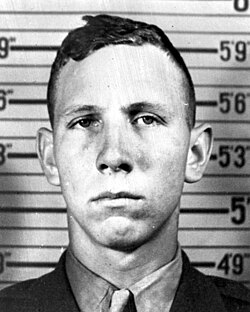
Harlon Block
A biography page prepared for verified family-history research and source-based documentation.
Notable Descendant
Harlon Henry Block (1924–1945)
Descendant of Zadock Woods and Iwo Jima Flag Raiser
Harlon Henry Block, a descendant of Texas pioneer Zadock Woods, was a United States Marine whose brief life became forever connected with one of the most recognizable photographs in American history — the raising of the United States flag on Mount Suribachi during the Battle of Iwo Jima.
Harlon was born Nov. 6, 1924, in Yorktown, DeWitt County, Texas, to Edward Frederick Block and Ada Belle Brantley Block. His connection to the Woods family came through his mother, Ada Belle, whose family descended from the early Woods line that had settled in Texas during the colonial period.
Thus, more than a century after Zadock Woods came to Texas with Stephen F. Austin’s colonists, one of his descendants would again become part of a defining moment in American history.
Growing Up in South Texas
The Block family eventually moved from the Yorktown area to Weslaco in the Rio Grande Valley, where Harlon’s father supported the family through dairy farming. Harlon grew into an accomplished athlete and became a standout football player at Weslaco High School.
With World War II underway, Harlon and several of his high school friends decided to enter the Marine Corps. Weslaco High School held an early graduation ceremony for the young men before they left for military service.
On Feb. 18, 1943, Harlon entered the United States Marine Corps at San Antonio. He completed recruit training in San Diego and then volunteered for parachute training, qualifying as a Marine parachutist — a Paramarine — in May 1943.
From Bougainville to Iwo Jima
Harlon was sent to the Pacific and joined the 1st Marine Parachute Regiment. He experienced his first combat during the Bougainville campaign, landing there in December 1943.
When the Marine parachute units were disbanded in 1944, Harlon was transferred to Company E, 2nd Battalion, 28th Marines, 5th Marine Division.
That assignment would carry him to Iwo Jima.
On Feb. 19, 1945, Harlon and his fellow Marines landed on the heavily defended Japanese island. One of their principal objectives was Mount Suribachi, the volcanic mountain dominating the southern end of the island.
Four days later, on Feb. 23, 1945, Marines reached its summit.
An American flag was raised that morning, but commanders wanted a larger flag that could be seen more easily across the island. A second flag was carried to the summit.
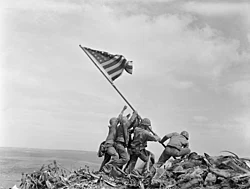
Harlon Block was among the six men who raised it.
The Photograph Seen Around the World
Associated Press photographer Joe Rosenthal captured the instant the six men drove the flagpole upward over Mount Suribachi.
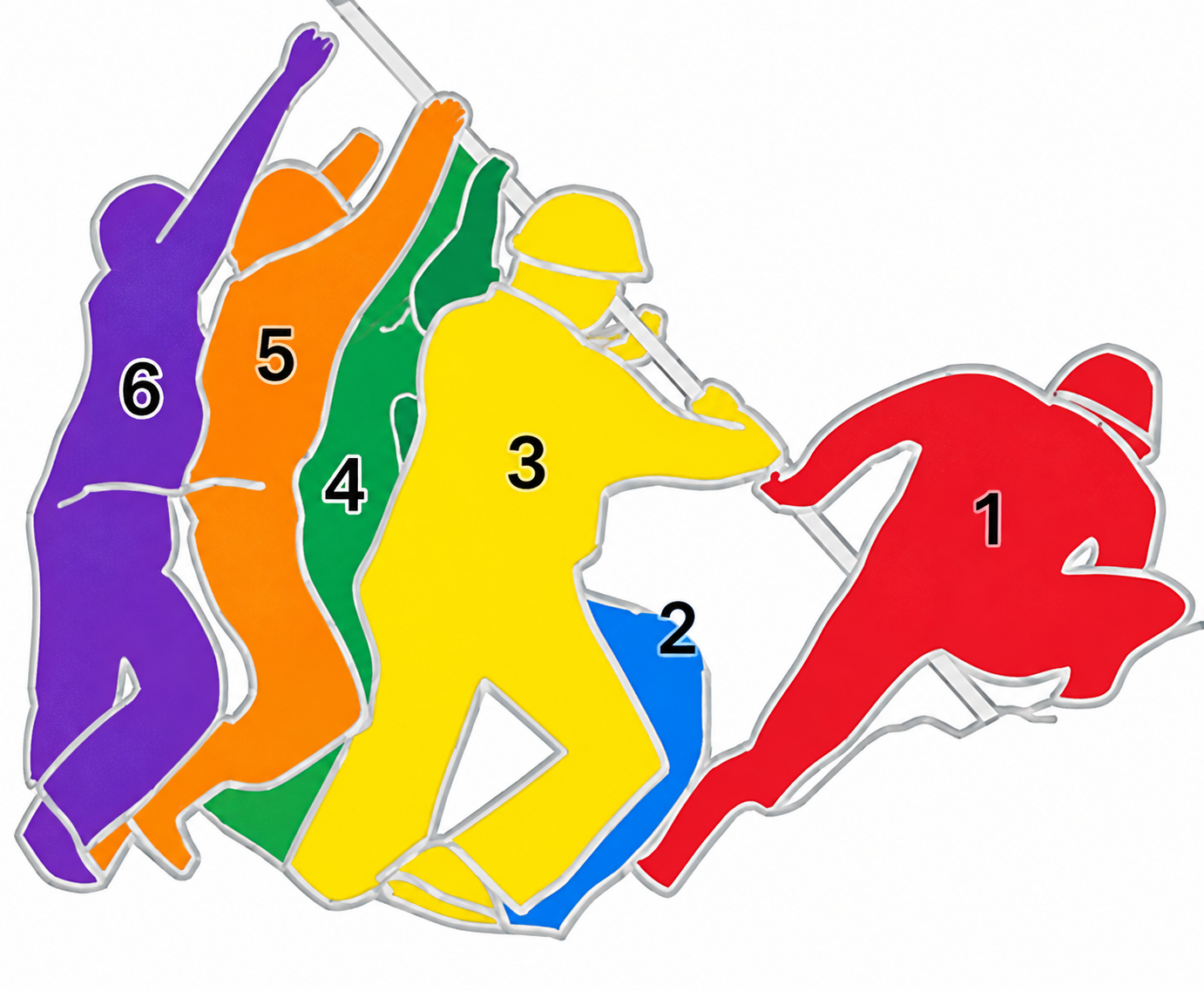
Harlon was the Marine at the base of the pole, helping plant it into the ground. The resulting photograph became one of the defining images of World War II and later served as the basis for the Marine Corps War Memorial near Arlington National Cemetery.
Harlon never knew how famous the photograph would become.
Only six days later, on March 1, 1945, Corporal Harlon Henry Block was killed in action on Iwo Jima.
He was only 20 years old.
“That’s Harlon”
There was another remarkable chapter to Harlon’s story.
He was initially misidentified in Rosenthal’s photograph. The Marine at the base of the flagpole was officially identified as another Marine who had also been killed on Iwo Jima.
But Harlon’s mother, Ada Belle Brantley Block, did not believe it.
When she saw the photograph, she recognized her son.
Family accounts record that Belle immediately insisted that the Marine was Harlon and continued to maintain that identification even when the official account said otherwise.
She was right.
After further investigation, the Marine Corps officially recognized in 1947 that the man at the base of the flagpole was Harlon Block.
A Woods Family Legacy
Harlon Block’s place in the Zadock Woods family story connects two very different periods of American history.
His ancestor Zadock Woods had come to Mexican Texas as one of Stephen F. Austin’s early colonists and helped establish a family on the Texas frontier. Zadock ultimately died during the Dawson Massacre in 1842 while responding to another call to defend Texas.
More than 100 years later, Zadock’s descendant Harlon Block left Texas during another time of war.
Zadock’s generation had helped establish Texas.
Harlon’s generation was called upon to fight a world war.
And on a volcanic island thousands of miles from the Texas communities where his ancestors had settled, Harlon helped raise an American flag in an image that came to symbolize the sacrifice of an entire generation.
Harlon’s remains were eventually returned to Texas. Today he rests at the Marine Military Academy in Harlingen, near the Iwo Jima monument modeled after Rosenthal’s famous photograph.
He was posthumously awarded the Purple Heart, and his service is commemorated by the United States Marine Corps
Help Preserve
Add to the Record
Have verified information or materials related to Harlon Block? Help the family archive preserve the story with care.